Check out and delivery of New & Noteworthy titles is available to legislative staff in Capitol and District offices. To arrange check out and delivery of any of these items, you can submit an online request through the New & Noteworthy page on our website or contact the library at 512-463-1252.
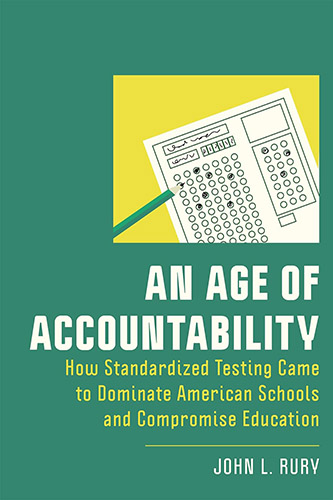
1. An Age of Accountability: How Standardized Testing Came to Dominate American Schools and Compromise Education
By John L. Rury
Chronicles standardized testing and how it evolved between 1970 and 2020. Examines the growing demand for educational accountability in the 1970’s, leading to the rise of standardized testing as the main vehicle of accountability. Describes issues related to cultural bias in test questions and racial bias evident in the differences in student test scores. Provides suggestions on how to potentially improve the system while still maintaining educational accountability.
Rutgers University Press, 2024, 231 pages
379.1580973 R948 2024

2. Everyone Who is Gone is Here: The United States, Central America, and the Making of a Crisis
By Jonathan Blitzer
Provides an in-depth look at the history and causes of the U.S.-Central American immigration crisis. Analyzes the immigration system at the U.S.-Mexico border and the role of U.S. foreign policy in Central America. Examines the history of federal immigration policy, from the codification of the refugee and asylum law in 1980 to three major humanitarian crises at the border, in 2014, 2019, and 2021. Considers war, crime, hunger, persecution, and economic collapse as motivating factors for migrants coming from El Salvador, Guatemala, and Honduras. Offers a multilayered picture of the immigration crisis by weaving together the stories of immigrants with those of government officials and politicians responsible for U.S. immigration policy.
Penguin Press, 2024, 523 pages
305.9 B649EV 2024

3. Latinoland: A Portrait of America's Largest and Least Understood Minority
By Marie Arana
Describes what it means to be Hispanic and Latino through in-depth historical research, interviews, and personal narratives. Studies the perceptions and discrimination Hispanic and Latino encounter in America. Explores the diversity and historical shifts within the ethnic, religious, and political makeups of their communities. Advocates for greater respect for Hispanic and Latino people and a better understanding of America’s "largest and fastest-growing minority." Mentions U.S. Representative Joaquin Castro.
Simon & Schuster, 2024, 554 pages
305.868 AR662 2024
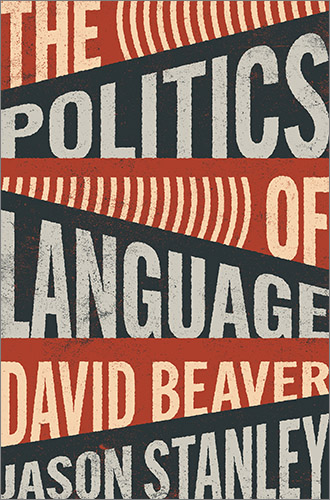
4. The Politics of Language
By David Beaver and Jason Stanley
Argues that language is inherently political and that the function of speech is to transmit a shared reality, emotion, or identity. Draws on psychology, linguistics, and philosophy to create a novel framework based on the ways language affects audiences: via emotions, perspectives, values, interests, and shared practices. Discusses concepts such as free speech, harmful and oppressive speech, and echo chambers.
Princeton University Press, 2023, 508 pages
303.375 B386P 2023
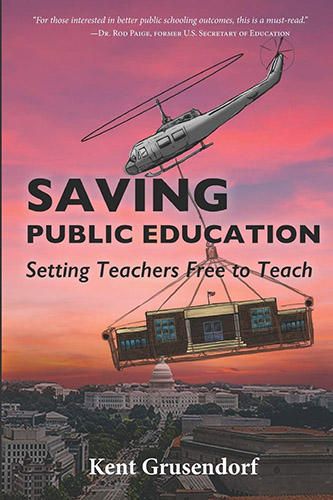
5. Saving Public Education: Setting Teachers Free to Teach
By Kent Grusendorf
Examines issues with previous attempts to reform the Texas public school system and the impact on teachers. Advocates for a new level of professional freedom for teachers while addressing issues of teacher and merit pay, administrative control, school finance, educational equity, and the achievement gap. Presents a historical overview of education reform efforts by six governors and the Texas Legislature. Offers solutions for improving the public education system and the ability of teachers to effectively educate their students.
Written by former Representative Kent Grusendorf, who served in the Texas House of Representatives from 1987 to 2007 and was the Chair of the House Public Education Committee during the 78th and 79th Legislative sessions.
Texans for Real Efficiency and Equity in Education, 2020, 165 pages
371.1 G892 2020
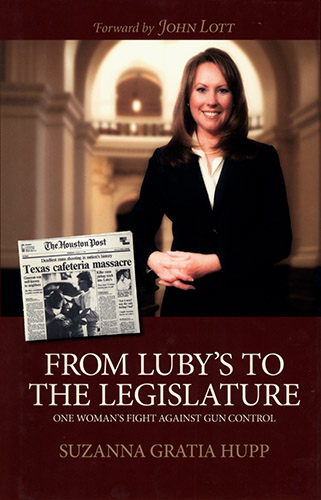
6. From Luby's to the Legislature: One Woman's Fight Against Gun Control
By Suzanna Gratia Hupp
Presents the political and personal memoir of former Representative Suzanna Gratia Hupp. Discusses the shooting she witnessed at a Luby’s Cafeteria restaurant in Killeen, Texas in 1991. Argues for the individual’s right to carry guns, the Second Amendment, and scrutinizes encroachment of the Fourth Amendment. Reflects on the multiple media interviews and events Hupp attended while supporting her beliefs. Mentions her participation as a citizen in support of gun-related bills: HB 1776, 73rd Legislature, R.S. and SB 60, 74th Legislature, R.S. Provides legislative intent for the school safety bill she authored, HB 2353, 77th Legislature, R.S.
Written by Hupp, who won a special election to the Texas House of Representatives in November 1996 and held office until 2007.
Privateer Publications, 2010, 186 pages
328.764 H929H 2010

7. Barn Burning Barn Building: Tales of a Political Life, From LBJ through George W. Bush and Beyond
By Ben F. Barnes and Lisa Dickey
Details the political inspirations and experiences of former Lieutenant Governor Ben F. Barnes' career in the 1960s and 1970s. Written by Barnes, this memoir describes his life in politics and provides insight into the Texas Democratic Party. Offers advice on how the Democratic Party can regain its prominence in Texas and how our political system can benefit from a public service approach. Barnes became the Speaker of the Texas House in 1965 at 26 years old and was elected Lieutenant Governor in 1969 at age 30.
Contains quotes and details of former members of the Texas Legislature and other public officials including: Governor Dolph Briscoe, Lieutenant Governor Bob Bullock, Presidents George H. W. Bush and George W. Bush, Attorney General of Texas Waggoner Carr, Governor John B. Connally, Jr., President Lyndon B. Johnson, U.S. Representative Barbara Jordan, Texas Speaker Gus Mutscher, U.S. Speaker Sam Rayburn, and Governor Preston Smith.
Bright Sky Press, 2006, 256 pages
328.764 B261B
This entry was posted on April 22, 2024 at 3:15 PM and has received 230 views.
Print this entry.